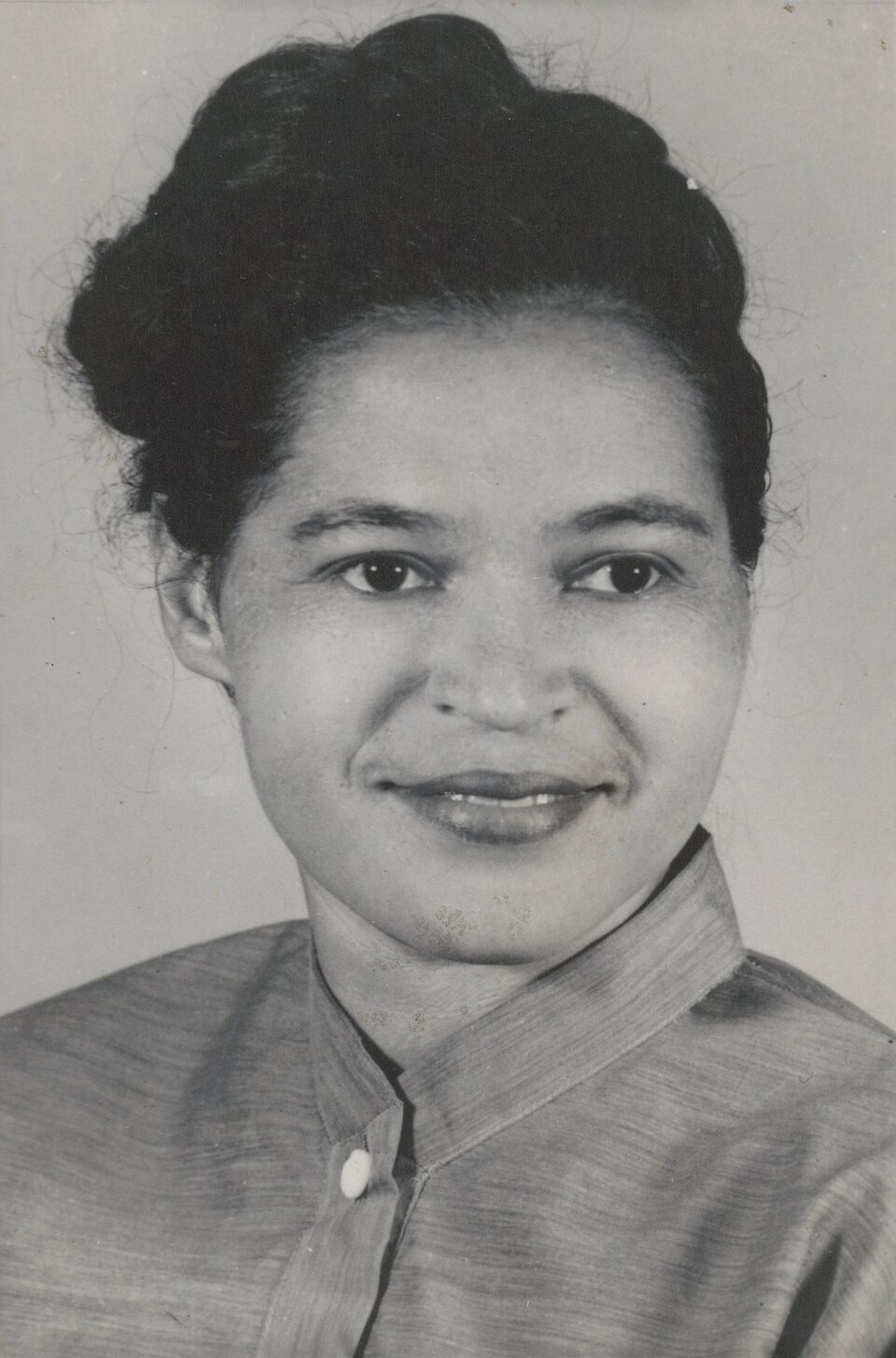
Rosa Parks: A Quiet Refusal That Echoed Through History
On a cold winter's evening in Montgomery, Alabama, on December 1, 1955, a pivotal moment unfolded that would forever alter the course of American history. Rosa Parks, a 42-year-old African-American seamstress, tired from a long day's work, boarded a city bus. She paid her fare and took a seat in the section designated for Black passengers. What seemed like an ordinary commute quickly transformed into an extraordinary act of defiance when, upon instruction from the bus driver, she refused to relinquish her seat to a white passenger. This single, quiet "no" was not merely a refusal to move; it was a profound assertion of fundamental rights, a challenge to deeply entrenched racial segregation, and the spark that ignited the American Civil Rights Movement.
Parks' courageous stand resonated with millions because it touched upon a universal yearning for dignity and equality—the very essence of what rights represent. Her arrest for violating Montgomery's segregation ordinances galvanized a community and brought into sharp focus the systemic injustices faced by African Americans. It compelled a nation to confront its moral failings and ultimately pushed it towards a more just future where the promise of equal rights might one day be realized for all.
The Anatomy of Defiance: Challenging Unjust Laws
To fully grasp the magnitude of Rosa Parks' act, it's crucial to understand the oppressive context of Jim Crow segregation in the American South. In 1955, laws like those in Montgomery mandated strict racial separation in public spaces, including transportation. Buses were particularly symbolic sites of this discrimination: the front seats were reserved for white citizens, while Black citizens were relegated to the back. A common and humiliating custom, enforced by law, allowed bus drivers to demand that Black passengers give up their seats if the "white" section was full, or even if a white passenger merely needed a seat in a row occupied by Black passengers. Parks was not in the "white" section; she was in the designated "coloured" section, yet was still expected to move.
Her refusal was not spontaneous in the sense of being unplanned. Parks was an active member and secretary of the Montgomery chapter of the National Association for the Advancement of Colored People (NAACP). She was well-aware of the injustices and had even attended Highlander Folk School, a training center for civil rights activists. Her defiance was a conscious, principled stand against a system that denied basic human dignity. It was an assertion of her inherent worth and an unyielding demand for the rights that should be afforded to every individual, regardless of race.
- The Personal Cost: Rosa Parks paid a significant personal price for her bravery. She lost her job as a seamstress and faced ongoing harassment and threats. Yet, her resolve remained unbroken, demonstrating the immense moral courage required to challenge deeply entrenched systems of injustice.
- The Legal Context: While Parks' act was a moral one, her arrest immediately threw the spotlight onto the legality of segregation itself. The ensuing legal battles became a critical component of the Civil Rights Movement, aiming to dismantle these discriminatory laws through the courts.
Understanding the Concept of Rights in the Struggle for Equality
Rosa Parks' refusal wasn't just about a bus seat; it was about the fundamental concept of rights. Philosophically, rights are justified claims or entitlements ascribed to individuals or groups, which impose corresponding duties or restraints on others. They serve as normative protections for interests, freedoms, or well-being, distinguishing them from mere permissions.
The philosophical underpinnings of rights can be traced back to natural law theory, positing inherent human goods like life and liberty that no authority can justly infringe without cause. Thinkers like John Locke articulated natural rights to life, liberty, and property, arguing that governments exist to secure these against violation, with consent as the legitimate source of political authority. The segregation laws in Montgomery directly contradicted these foundational principles, denying African Americans their fundamental civil and political rights, specifically the right to equal treatment under the law and freedom from discrimination.
Parks' act underscored the distinction between legal protections and moral imperatives. While segregation was legally sanctioned by positive law, it was morally indefensible, violating the inherent rights derived from reason and human nature. The Civil Rights Movement sought to align positive law with these deeper moral principles, transforming society's legal framework to reflect the universal demand for justice and equality. The struggle was not to *grant* new rights, but to *secure* the recognition and enforcement of rights that were already inherently possessed but systematically denied.
From a Single 'No' to a Movement: The Montgomery Bus Boycott
Rosa Parks' arrest was the catalyst for the Montgomery Bus Boycott, a strategic and sustained act of nonviolent civil disobedience that would last for 381 days. Led by the recently appointed president of the Montgomery Improvement Association (MIA), a young and then relatively unknown Reverend Dr. Martin Luther King Jr., the boycott called upon the Black community of Montgomery to refuse to ride city buses until they were desegregated. The demands were simple but profound:
- Courteous treatment of Black passengers by bus drivers.
- Passengers to be seated on a first-come, first-served basis, with Black passengers seating from the back forward and white passengers from the front backward.
- Black bus drivers to be hired on routes predominantly serving Black communities.
The boycott demonstrated the incredible power of collective action and economic pressure. Despite facing harassment, violence, and economic hardship, thousands of African Americans walked, carpooled, or found alternative transportation for over a year. Their unwavering commitment highlighted the severe impact of denying basic rights and the collective resolve to fight for them.
The legal challenge to bus segregation, Browder v. Gayle, made its way through the federal courts. On November 13, 1956, the U.S. Supreme Court upheld a lower court's ruling declaring that Alabama's and Montgomery's laws requiring segregated buses were unconstitutional. On December 20, 1956, the order to desegregate was served, and the boycott officially ended the next day. This victory was a monumental step, validating the moral claims for equal rights through the highest legal authority in the land.
The Enduring Legacy and the Fight for Universal Rights
The Montgomery Bus Boycott, sparked by Rosa Parks' singular act of defiance, was a watershed moment. It propelled Martin Luther King Jr. to national prominence and showcased the efficacy of nonviolent protest as a means to achieve social change. More importantly, it laid foundational groundwork for the broader Civil Rights Movement, leading to landmark legislation such as the Civil Rights Act of 1964 and the Voting Rights Act of 1965, which legally outlawed discrimination based on race, color, religion, sex, or national origin.
Rosa Parks' story serves as a powerful reminder that the recognition and enforcement of rights are not merely about declarations but about constant vigilance and action. While documents like the 1948 Universal Declaration of Human Rights proclaim the universality of certain entitlements, their actual implementation often varies. The struggle in Montgomery underscores that declarations are only effective when backed by institutional strength, the rule of law, and the courageous individuals willing to challenge violations.
Even today, debates persist on how to best secure and uphold human rights globally, grappling with issues such as cultural relativism versus universal standards, and the balance between individual entitlements and collective claims. The legacy of Rosa Parks compels us to consider:
- The Power of the Individual: One person's principled stand can ignite monumental change.
- The Importance of Collective Action: A sustained movement, rooted in shared values, is crucial for systemic transformation.
- The Ongoing Nature of Rights: Rights are not static; they require continuous advocacy, protection, and adaptation to new challenges.
- The Role of Law and Justice: Laws must reflect moral principles of equality to truly secure rights for all.
Rosa Parks' defiant 'no' on that bus in Montgomery was more than a refusal; it was a profound assertion of her inherent rights and a catalytic moment in the fight for civil liberties. It demonstrated that injustice, however deeply entrenched, can be challenged and ultimately overcome through courage, community, and an unwavering belief in the fundamental dignity of every human being. Her legacy reminds us that the quest for equal rights is a continuous journey, demanding vigilance, empathy, and the courage to speak truth to power.